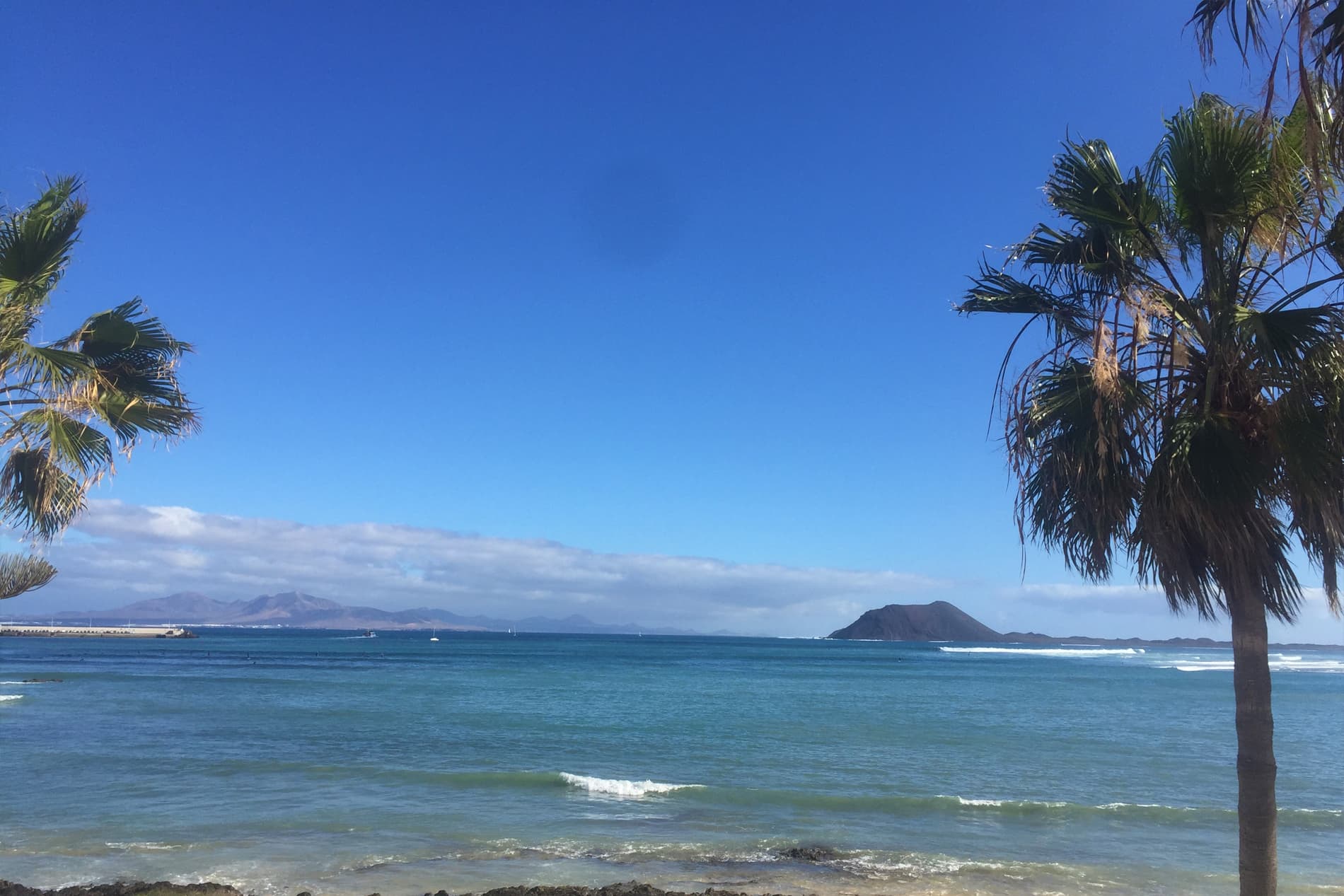
Van wereldrecord kitesurfsnelheden tot maagdelijke duikriffen — Fuerteventura is de onbetwiste Europese hoofdstad van de watersport. Dit is jouw complete gids om er optimaal van te profiteren.
Waarom Fuerteventura Europa's watersporthoofstad is
Fuerteventura ligt slechts 100 km voor de kust van West-Afrika, precies in de baan van de krachtige noordoostpassaatwinden — dezelfde winden die Christoffel Columbus over de Atlantische Oceaan droegen. Gecombineerd met 340 zonnedagen per jaar, een aangenaam Atlantisch water van gemiddeld 20–24°C en enkele van de langste witte zandstranden van Europa, is het eiland hét reisdoel geworden voor iedereen die van de zee houdt.
Of je nu een ervaren sporter bent of voor het eerst iets nieuws wilt proberen tijdens je vakantie — Fuerteventura heeft een watersport voor jou. Hier volgt een uitgebreid overzicht van alles wat het eiland te bieden heeft.
Kitesurfen: het absolute hoogtepunt
Fuerteventura wordt keer op keer gekozen als een van de drie beste kitesurfbestemmingen ter wereld. Het beroemde Flag Beach bij Corralejo — vernoemd naar de kleurrijke kites die de lucht vullen — biedt rustige lagunen voor beginners en dwarswindroutes voor gevorderden. De consistente Tramontana en Levante passaatwinden waaien het grootste deel van het jaar met 15–35 knopen, waardoor de omstandigheden voorspelbaar en betrouwbaar zijn.
Beste spots: Flag Beach, Sotavento Beach (gastlocatie van het jaarlijkse PWA Windsurf & Kitesurf World Cup), Playa del Moro.
Scholen in Corralejo: Rond Flag Beach zijn meer dan twaalf IKO-gecertificeerde scholen gevestigd. De meeste bieden beginnerscursussen aan (doorgaans 9–12 uur les) en verhuren materiaal aan ervaren rijders. Reken op €60–€90 per uur voor privélessen, of €280–€400 voor een complete beginnerscursus.
Windsurfen: een legendarische traditie
Lang voordat kitesurfen zijn intrede deed, stond Fuerteventura al bekend als een paradijs voor windsurfers. Het eiland herbergt al meer dan 30 jaar het PWA Windsurfing World Cup op Sotavento. Het strand van Sotavento is uniek — een ondiepe lagune beschermd door een natuurlijke zandbank, met spiegelglad water aan de ene kant en open oceaangolven aan de andere, geschikt voor elke rijstijl.
Flag Beach bij Corralejo is al even befaamd. De spot die bekendstaat als "Cangrejos", net voor de kust, levert perfecte golfrijomstandigheden op wanneer de noordelijke deining binnenkomt. Club Mistral, ION Club en Fanatic Boards zijn de meest gerespecteerde scholen op het eiland.
Surfen: ondrukke golven voor elk niveau
Fuerteventura ontvangt een constante Atlantische deining, vooral van oktober tot april, en biedt een indrukwekkende verscheidenheid aan breaks. Het noorden van het eiland rond Corralejo heeft meerdere rif- en strandbrekende golven binnen handbereik, terwijl de westkust thuisgeeft aan enkele van de meest gewaardeerde point breaks van het eiland.
Beginners: La Caleta de Famara (op het naburige eiland Lanzarote, bereikbaar per veerboot) of El Cotillo aan de westkust van Fuerteventura bieden zachte strandgolven die perfect zijn voor de eerste lessen. Playa de la Escalera in Corralejo is ook een populaire plek om te leren.
Gevorderden: De rifbreak bij Majanicho produceert holle, snelle golven bij de juiste deining. Rocky Point bij Corralejo kan lange, krachtige ritten opleveren bij een grote noordwestelijke deining. Punta de la Ballena aan de zuidkust is een andere parel wanneer de omstandigheden kloppen.
Een surfles van 2 uur in groepsverband inclusief boardverhuur kost doorgaans €30–€50, of €15–€25 per dag voor alleen boardverhuur zodra je zelfstandig kunt surfen.
Paddleboarden (SUP): ontdek op je eigen tempo
Stand-up paddleboarden is enorm populair geworden op Fuerteventura — en dat is niet moeilijk te begrijpen. De beschutte wateren rond de jachthaven van Corralejo en de rustigere baaien langs de westkust bieden glashelder, vlak water dat ideaal is om te peddelen. Op windstille dagen kun je recht naar beneden kijken naar de zanderige bodem op 4–5 meter diepte en papegaaivis en roggen zien glijden.
SUP-tochten worden steeds populairder — begeleide excursies voeren je langs de kust naar zeegrotten, snorkelplekken en stranden die alleen vanaf het water bereikbaar zijn. Halve dagstochten kosten doorgaans €40–€60 per persoon inclusief materiaal.
Duiken en snorkelen
De wateren rond Fuerteventura maken deel uit van een UNESCO Biosfeerreservaat en herbergen een buitengewone onderwaterwereld. Engelhaai (elders kritisch bedreigd), zeeschildpadden, roggen, murenen, baracuda's en af en toe hamerhaaien behoren tot de vaste bewoners.
Beste duikplekken: El Cantil voor de noordkust van Corralejo biedt spectaculaire wandduiken tot 30 m diepte. Het eiland Los Lobos (20 minuten per veerboot vanuit Corralejo) heeft maagdelijke riffen en vaak een uitstekend zicht van 20–30 m. Het wrak van de Metron bij Gran Tarajal is een favoriet voor wrakduikers.
Voor snorkelaars zijn de rotsachtige landpunten rond Corralejo en de natuurlijke poelen bij El Cotillo gemakkelijk bereikbaar en tonen ze een levendige rifdierenwereld — helemaal zonder boot.
Walvissen en dolfijnen spotten
De diepe wateren tussen Fuerteventura en Gran Canaria vormen deel van de Canarische Eilanden Cetaceaënpassage, waar minstens 30 walvis- en dolfijnensoorten leven. Tot de vaste bewoners behoren tuimelaars, griend en af en toe een potvis. In de zomer trekken soms blauwe vinvissen en bultruggen door tijdens hun migratie.
Verschillende rederijen in Corralejo en Morro Jable organiseren boottochten die specifiek gericht zijn op het spotten van walvisachtigen, met een bioloog aan boord voor toelichting. Deze tochten duren 3–4 uur en kosten €35–€60 per volwassene.
Sportvisserij
Sportvissers kunnen in de diepe wateren voor de kust van Fuerteventura terecht voor blauwe marlijn, geelvintonijn, wahoo en dorado (mahi-mahi). Volledige en halve dagcharters vertrekken vanuit Corralejo en Puerto del Rosario, inclusief materiaal. Langs de kust is rotsvisserij mogelijk op brasem, baars en snapper.
Verblijf bij Canary Villas
Onze beachfront villa's in Corralejo liggen op slechts enkele minuten van Flag Beach, de veerboot naar Los Lobos en elke watersportschool aan de noordkust. Word wakker met uitzicht op de Atlantische Oceaan, spoel je wetsuit af op het privéterras en sta binnen tien minuten op het water.