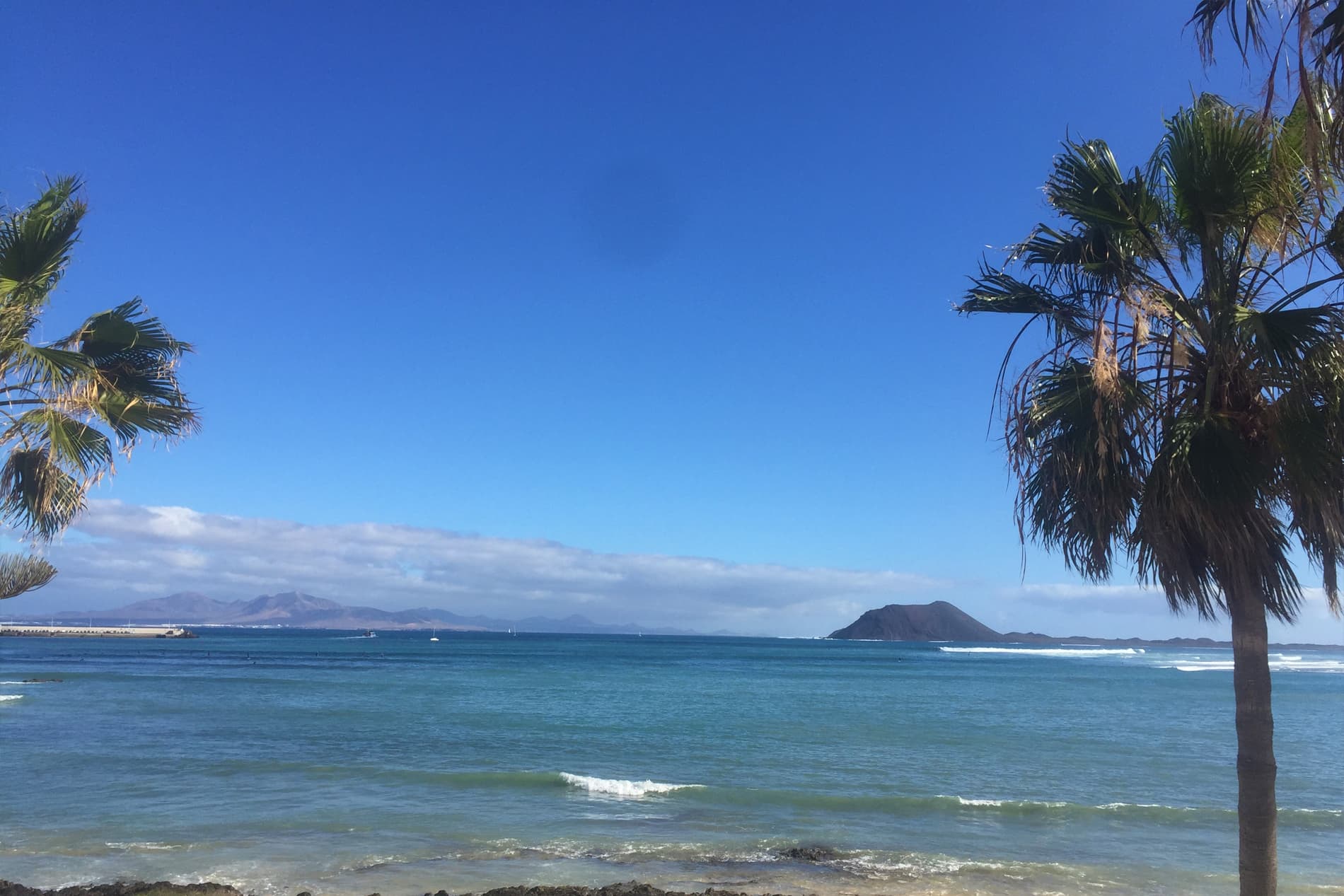
The Corralejo Natural Park is one of the most spectacular landscapes in the Canary Islands — 10km of rolling white dunes backed by volcanic peaks. Here's how to make the most of it.
The Corralejo Natural Park
Declared a natural park in 1982 and a UNESCO Biosphere Reserve as part of the wider island designation, the Parque Natural de Corralejo covers 2,700 hectares of the north-east coast of Fuerteventura. It is dominated by an extraordinary landscape of shifting white sand dunes — the remnants of ancient desert conditions when the Sahara extended much further than it does today — that stretch for 10km along the Atlantic coast.
The dunes are extraordinary not just for their scale but for their dynamism. The north-east trade winds continuously reshape them, and the landscape looks subtly different with each visit. The sand itself is unusually white and fine — almost entirely composed of shells and coral fragments rather than volcanic rock — giving the park a distinctly Caribbean appearance in contrast to the raw volcanic mountains behind.
The Beaches Within the Park
Flag Beach (Playa de la Bandera): The most accessible beach within the park, famous worldwide for kitesurfing and windsurfing. The beach is wide and backed directly by the dunes, with watersports schools and beach bars lining the access road. Swimming is possible but conditions can be choppy when the wind is strong.
Grandes Playas: The 'big beaches' are a series of broad, wild Atlantic beaches within the park boundaries. The water here is cleaner and clearer than at the town beach, with a more natural feel. Conditions can be energetic — decent body-boarding surf when swell is present. Car park at the southern end of the park near the Riu hotels.
Playa del Moro: Slightly more sheltered than the open park beaches, with calmer conditions suitable for swimming. Popular with families.
Wildlife in the Park
The dunes are home to species found nowhere else on Earth. The Corralejo sand dune gecko (Tarentola angustimentalis) is one of several endemic reptiles that shelter under the sparse vegetation between the dunes. Various lizard species dart between the rocks. Migrant birds use the park as a resting stop on their trans-Saharan journeys in spring and autumn. And in the shallow waters just offshore, the UNESCO protection has allowed marine life to recover to extraordinary richness — snorkelling from the park beaches often yields encounters with ray, turtles, and abundant reef fish.
Activities in the Park
Walking: Marked trails cross the dunes at several points. The best walk follows the ridge of the highest dunes at dawn, with views across to Lobos Island and Lanzarote on one side and the volcanic interior of Fuerteventura on the other. Allow 2–3 hours for a full circuit from the car park.
Cycling: The FV-1 road that runs through the park is a popular cycling route — you can hire bikes in Corralejo and cycle the 10km through the park to the beaches. An early morning cycle through the dunes before the sun gets too strong is a wonderful experience.
Photography: The light on the dunes at golden hour (the hour before sunset) is extraordinary — deep amber light creating intense shadows across the rippled sand. Landscape photographers make special trips for this.
Kitesurfing and windsurfing: Flag Beach is one of the top kitesurfing locations in Europe. Even if you're not participating, the spectacle of colourful kites against the dunes and sky is worth the trip.
Visiting Responsibly
The park is fragile. Stay on marked paths in sensitive dune areas; take all rubbish with you; don't drive off the designated roads; don't pick plant material or disturb wildlife. The park's protection is what makes it extraordinary — without it, the dunes would long since have been built over, as happened with similar landscapes elsewhere on the island.
From Our Villas to the Dunes
Our Corralejo villas are within cycling distance of the Parque Natural. You can be in the heart of the dunes in under 20 minutes on a bike — or even on foot in 40–50 minutes. Sunrise walks to the dunes are a particular favourite of our guests. Book your stay in Corralejo →